Total population
1,612,373
Located in the central part of Sindh, Naushahro Feroze District is an important agricultural and commercial district of Shaheed Benazirabad Division. The district lies along the fertile plains of the Indus River basin and benefits from an extensive irrigation network that supports a predominantly agriculture-based economy. The district headquarters is Naushahro Feroze City, while other major population centers include Moro, Kandiaro, Mehrabpur, Bhiria, and Darya Khan Marri. The local economy is primarily based on agriculture, livestock, trade, transport, and agro-based industries, with the district being well known for the production of wheat, cotton, sugarcane, rice, dates, vegetables, and other crops. Its strategic location along major road and railway routes connects it with important commercial centers of Sindh, contributing to regional trade and economic activity.
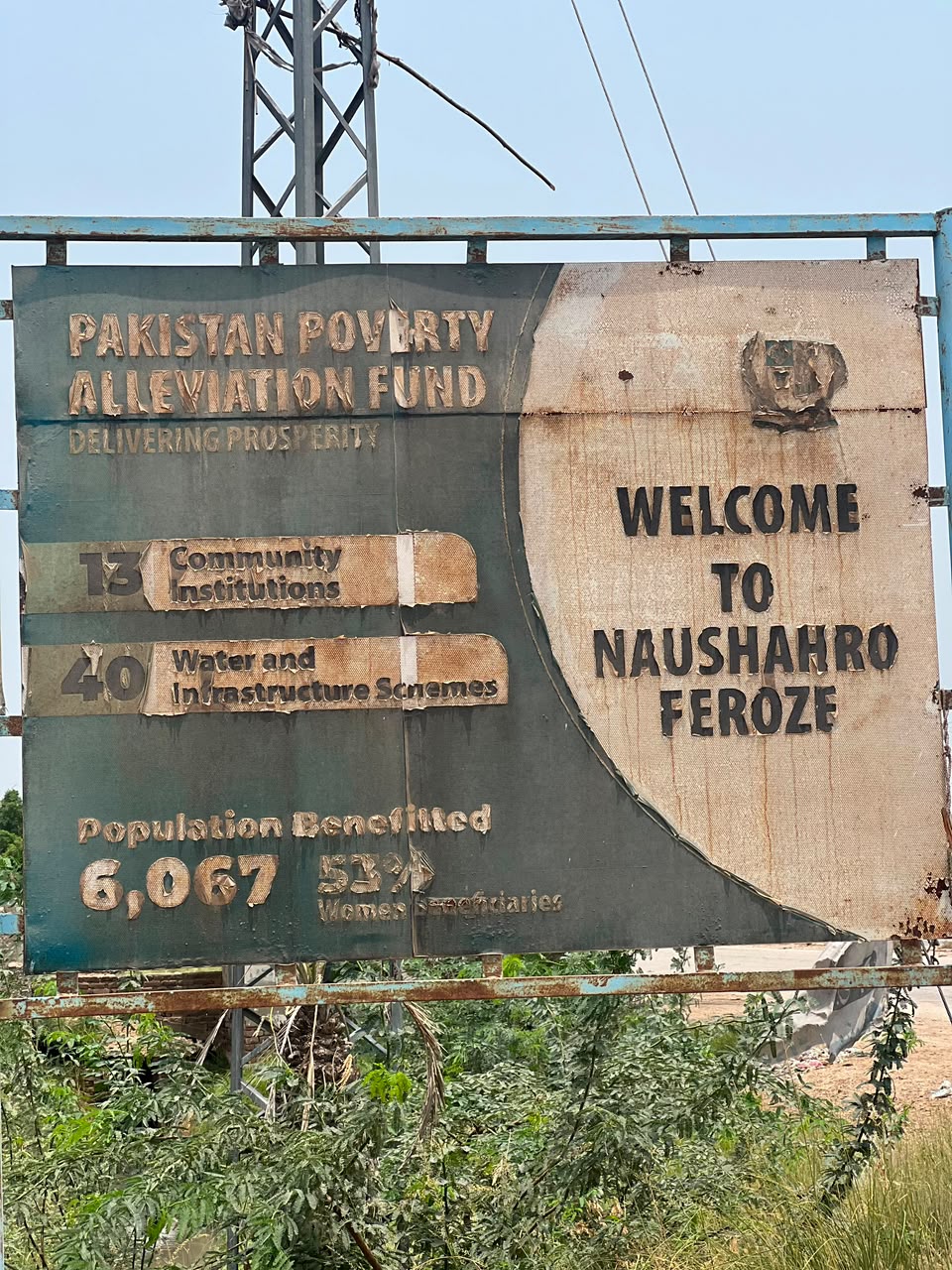
1,612,373
2,945 km²
5 tehsils · 51 union councils
| Indicator | Value |
|---|---|
| Total population | 1,612,373 |
| Tehsils | 5 |
| Union councils | 51 |
| Total area | 2,945 km² |
| Type | Count |
|---|---|
| Schools | 2,174 |
| Colleges | 12 |
| Facility type | Count |
|---|---|
| DHQ hospital | 1 |
| RHC | 13 |
| BHU | 44 |
| Station | Count |
|---|---|
| Naushahro Feroze | 1 |
| Moro | 1 |
| Abran | 1 |
| Phull | 1 |
| Padidan | 1 |
| Darya Khan Mari | 1 |
| Mithiani | 1 |
| Kot Mitha Khan | 1 |
| Total | 8 |
| Member | Constituency | Name (Party) |
|---|---|---|
 |
NA-211 Naushahro Feroze-I | Syed Abrar Ali Shah (PPPP) |
 |
NA-212 Naushahro Feroze-II | Zulfiqar Ali Behan Shah (PPPP) |
| Member | Constituency | Name (Party) |
|---|---|---|
 |
PS-32 Naushahro Feroze-I | Syed Sarfraz Ali Shah (PPPP) |
 |
PS-33 Naushahro Feroze-II | Hassan Ali Shah (PPPP) |
 |
PS-34 Naushahro Feroze-III | Mumtaz Ali Chandio (PPPP) |
 |
PS-35 Naushahro Feroze-IV | Zia-ul-Hassan (PPPP) |
Poorly maintained rural roads reduce connectivity, increase travel costs, and limit access to markets and public services.
Irrigation shortages, groundwater issues, and weak water management affect agriculture and access to safe drinking water.
Shortages of specialists, equipment, and emergency services limit healthcare access, especially in rural areas.
Limited industrial growth, low value addition, and fewer job opportunities contribute to unemployment and poverty.